




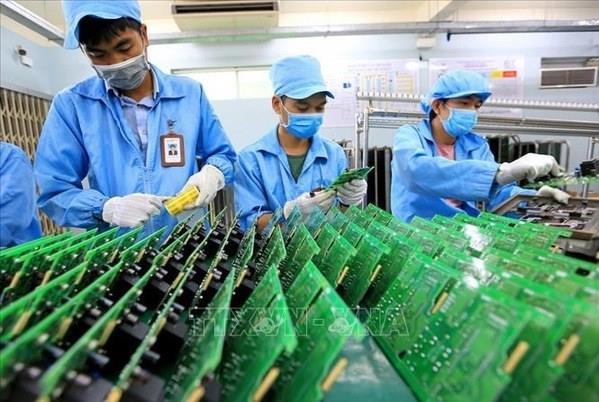
In the late 1970s and early 1980s, the Ministry of National Defence’s Z181 Factory produced Việt Nam’s first semiconductor components, diodes and transistors for domestic use and export to Eastern Europe. The industry has advanced remarkably since.
Việt Nam’s semiconductor industry offers the country an opportunity to shift from a growth model heavily reliant on low-cost labour and manufacturing toward more technology-intensive, higher value-added sectors, according to Nikkei Asia.
The Việt Nam-US semiconductor partnership is therefore not simply a “golden opportunity” arising from geopolitical shifts, but also a long-term test of Việt Nam’s institutional reform and implementation capacity. If domestic capacity cannot keep pace, adjusting targets toward quality and...
Professor Vũ Văn Yêm, Vice President of Hà Nội University of Science and Technology (HUST), spoke to Việt Nam News reporter Lê Hương about the university''s development strategy and its programme to attract Vietnamese academics working overseas back to the...
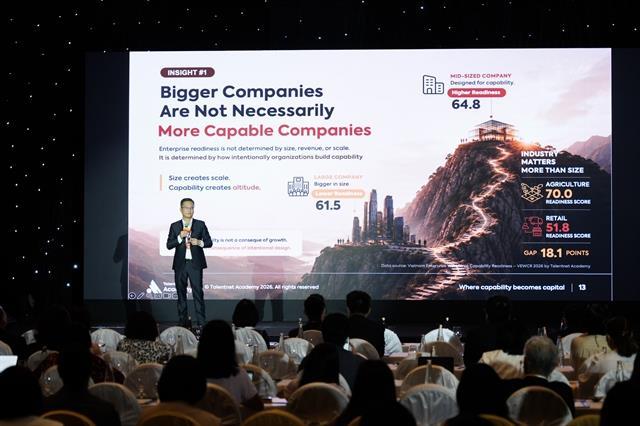
Vietnamese businesses are pursuing ambitious growth plans, but many may lack the workforce capabilities needed to translate them into results, according to the Vietnam Enterprise Workforce Capability Readiness report.
Intel is relocating part of its semiconductor production lines from Costa Rica to its facility in HCM City-based Saigon High-Tech Park, signalling a deeper commitment to Việt Nam as a primary strategic pillar in its global manufacturing network.
Vietnamese companies have also gradually joined the global value chain by improving their capabilities in chip design, production and related services. Notably, a semiconductor chip manufacturing plant project developed by the Viettel Military Industry and Telecoms Group (Viettel) has already...
VietNuc said developing domestic talent must be a priority, with policies to direct top students into nuclear programmes linked to clear job prospects, alongside stronger investment in research and development.
Việt Nam’s railway sector remains hampered by limited technological capacity. Expertise in core fields such as locomotive design, rolling stock manufacturing, signalling, automation and electrification is still largely imported, with little domestic research and production.
The Alliance for Research and Training in Semiconductors and Microelectronics (ARTSeMi) for the 2025–30 period was officially launched at a forum in HCM City on Thursday.
France''s Dassault Systèmes pledged to help strengthen Việt Nam’s innovation-led ecosystem and build a strong digital workforce by applying global expertise, industry best practices, and advanced digital twin solutions.